
Curriculum, Instruction, & Assessment
Resources
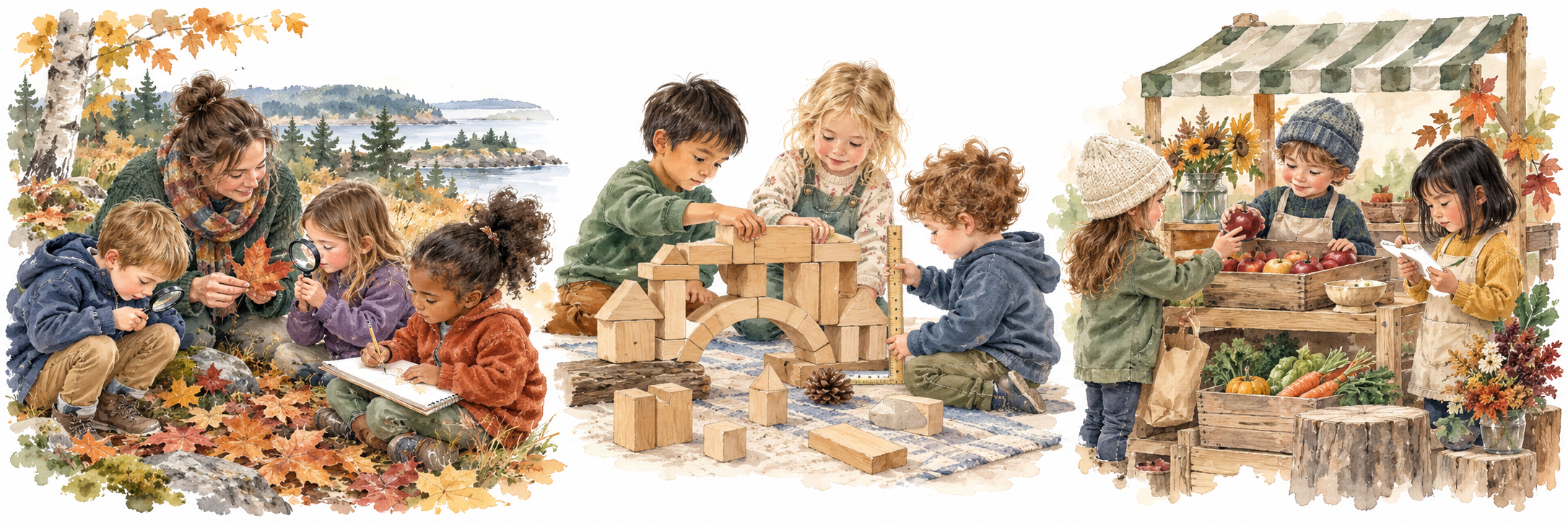
What looks like play is filled with possibility.
A pretend store becomes a place to write shopping lists, count change, and practice taking turns. A block tower invites children to measure, plan, and try again. A walk outdoors sparks questions, new vocabulary, and discoveries worth writing about. At HES, we are creating more opportunities for this kind of learning—experiences that build strong readers and mathematicians while nurturing creativity, curiosity, and friendships.
Play is how learning comes to life
Purposeful play brings clear learning goals together with children’s natural desire to explore. Teachers thoughtfully select materials, introduce skills, ask questions, and guide children’s thinking.
Play does not take the place of learning. It is a powerful way children learn. Alongside direct teaching in reading, writing, and math, children need opportunities to practice and apply those skills in meaningful ways.
Through play, children can:
- Build literacy: Tell stories, explore sounds, write signs, and explain their ideas.
- Develop numeracy: Count, compare, measure, recognize patterns, and solve problems.
- Think creatively: Design, build, test, and revise.
- Grow together: Listen, negotiate, share materials, and work through disagreements.
More discovery. More time outdoors.
We want children to have more time to move, notice, wonder, and connect—with one another and with the world around them. That means protecting time for hands-on exploration and using technology thoughtfully, with a clear purpose.
“The child gives us a beautiful lesson – that in order to form and maintain our intelligence, we must use our hands.”
— Maria Montessori,
Cultivating an educational landscape where everyone thrives!